2×2 grow tent
The perfect first tent or a dedicated propagation/seedling station. Fits in a closet and pairs with a ~100W LED. VIVOSUN and Mars Hydro make reliable budget options.
- Footprint2×2 ft
- Height~5 ft
- Light~100 W LED
- Plants1
Reader-supported: some links on this page are affiliate links, which may earn us a commission at no extra cost to you. As an Amazon Associate we earn from qualifying purchases.
A grow tent is a reflective, light-proof box that lets you control a growing environment indoors. Two things decide your choice: the footprint (how many plants) and the build quality (zippers, poles and fabric you won't fight with).
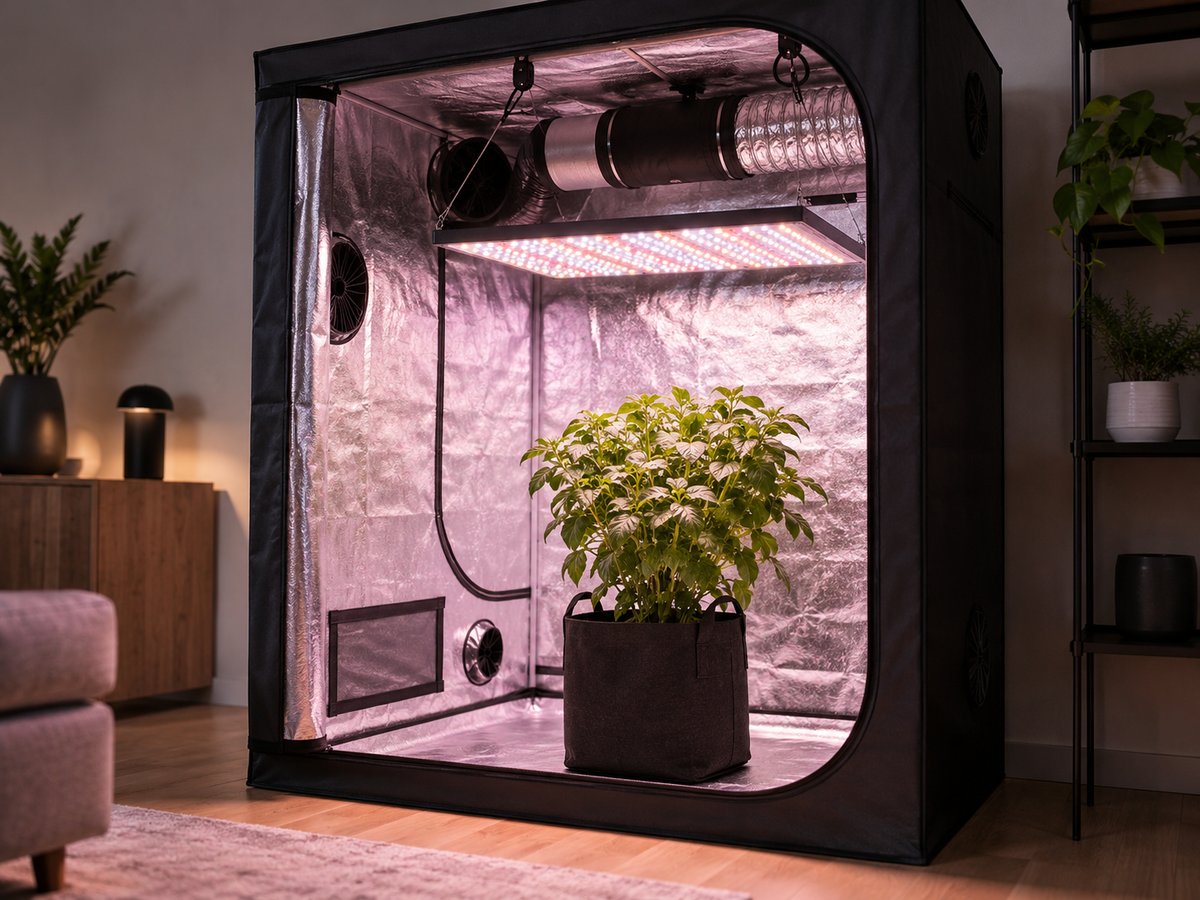
Match the tent to the canopy you want, then to your ceiling height and the room you can spare. After that, build quality is everything: thick light-proof canvas, sturdy poles rated for your light and fan, and heavy-duty zippers separate a tent you love from one you replace.
A quick map of the options before you spend.
| Tent size | Plants (approx.) | Typical light draw | Price tier |
|---|---|---|---|
| 2×2 ft | 1 plant / propagation | ~100–150 W | $ |
| 2×4 ft | 2–3 plants / seedlings | ~150–250 W | $$ |
| 4×4 ft | 4 plants (most popular) | ~300–450 W | $$ |
| 5×5 ft | 4–6 plants | ~450–650 W | $$$ |
| 4×8 ft | 8 plants / two zones | ~600–900 W | $$$ |
Established product lines we'd point a friend to. Specs are typical figures — always confirm the current listing.
The perfect first tent or a dedicated propagation/seedling station. Fits in a closet and pairs with a ~100W LED. VIVOSUN and Mars Hydro make reliable budget options.
The sweet-spot size for home growers — room for four plants under a single mid-power LED. Look for 1680D+ canvas and a steel pole frame for hanging gear.
If you want the upgrade: thicker canvas, lined corners, tool bags and beefy zippers. AC Infinity CLOUDLAB and Gorilla tents are the benchmarks for build quality.
Double the 4×4 footprint — run two light cycles side by side, or grow eight plants in one space. Needs serious ventilation and usually two lights.
Work backwards from plants. A rough guide: a 2×2 fits one plant, a 4×4 fits four, and a 4×8 fits eight. Then check your ceiling — you need room for the plants plus a light hung overhead plus a fan, so aim for a tent at least 5–6.5 ft tall. When in doubt, the 4×4 is the most flexible starting point.
A tent is just the shell. Plan for three more things: a grow light sized to the footprint, an inline exhaust fan with a carbon filter for airflow and odor, and something to monitor temperature and humidity. Our lighting and climate-control guides cover each.
Higher denier (e.g. 1680D vs 600D) means thicker, more light-proof and tear-resistant canvas that holds its shape and blocks light leaks. Cheap thin tents sag under the weight of a light and fan and let light escape, which can stress plants. It's the spec most worth paying up for.
Almost — bedrooms, garages, basements and closets all work. Make sure you have a power outlet nearby, somewhere to vent warm air, and a floor that can handle occasional water. Avoid spaces with extreme temperature swings unless you add heating or cooling.